


 CALL US NOW
 EMAIL US NOW


When you get hit from behind, your first question is usually simple: who pays for this? In a lot of cases, the answer is straightforward. But Boston Rear-End Accident Fault can still get messy fast once insurance companies start pointing fingers and digging for “exceptions.”
Here’s the good news. Massachusetts has a strong starting point for these cases: the rear driver is usually presumed at fault. Here’s the not-so-good news. That presumption is not automatic, and it can be challenged. The details matter, and the evidence matters even more.
The “presumption of fault” in Massachusetts rear-end crashes
In most Massachusetts rear-end collisions, the driver who hit the car in front is presumed to be at fault. That’s because every driver has a basic duty to:
- Keep a safe following distance
- Pay attention
- Drive at a speed that fits traffic and road conditions
- Be ready for normal stops in traffic
So when a rear driver hits a front driver, insurers often treat it like, “You were too close or not paying attention.” For many everyday crashes on the Mass Pike, Storrow, the Southeast Expressway, or surface streets in Boston, that’s exactly what happened.
But remember: a presumption is a starting point, not the finish line.
Why the rear driver is usually blamed (and why insurers like it)
Rear-end claims are common. Insurance adjusters handle them every day. They also know juries tend to expect drivers to leave space and stay alert.
That’s why Boston Rear-End Accident Fault often lands on the rear driver based on basic logic:
- The front car has the right to slow down or stop for traffic
- The rear car controls the gap between vehicles
- If you hit someone from behind, you likely didn’t have enough room
In many cases, the police report and vehicle damage line up with that story. Then the insurer tries to wrap things up quickly, sometimes before you even know the full medical picture.
Massachusetts uses comparative negligence (fault can be shared)
Here’s the part many people don’t realize. Massachusetts follows a modified comparative negligence rule. That means fault can be split between drivers.
In plain English: you can still recover compensation even if you share some blame, as long as you are not more than 50% at fault. If you are found 51% or more at fault, you can’t recover from the other driver.
If you’re found partially at fault, your compensation is reduced by your percentage. Example:
- Total damages: $50,000
- You are 20% at fault
- You could recover $40,000
This is why Boston Rear-End Accident Fault is not always “rear driver pays, end of story.” A small shift in fault can mean a big shift in money.
For an authoritative overview of how Massachusetts handles fault and legal claims, you can also review the state’s resources on civil cases and court procedures here: https://www.mass.gov/orgs/massachusetts-court-system
Common exceptions: when the front driver may share fault
Even though the rear driver usually starts out presumed responsible, there are real situations where the front driver caused or contributed to the crash. Insurance companies look for these, and sometimes they’re legit.
1) The front driver reversed unexpectedly
If the front vehicle suddenly backs up into the rear vehicle, that can flip liability. This happens more than you’d think in:
- Tight Boston parking spots
- Driveways
- Congested side streets
- Double-park situations
The damage pattern and witness statements can be key here.
2) Brake lights weren’t working
If a vehicle’s brake lights are out, the rear driver may argue they had little warning. This doesn’t always erase rear-driver fault, but it can lead to shared responsibility.
Helpful evidence includes:
- Photos of the rear of the front car
- Repair records
- Statements from the responding officer or a mechanic
3) Sudden stop with no good reason
Stopping in traffic is normal. Slamming the brakes for no reason can be different. If the front driver stops abruptly without a legitimate traffic reason, insurers may argue they contributed.
That said, “I stopped because I thought I saw something” can turn into a he-said, she-said fight. That’s where independent evidence matters.
4) Unsafe lane change right before impact
Sometimes a “rear-end” crash isn’t really a classic rear-end. If the front driver cuts in too close and then brakes, the rear driver may not have time to react.
This is common in:
- Merges
- Exit ramps
- Busy Boston intersections
- Stop-and-go traffic where drivers squeeze into gaps
Dash cam footage can be gold in these cases.
5) Road hazards, weather, and chain reactions
Multi-car pileups are their own category. If a third driver started the chain reaction, Boston Rear-End Accident Fault can be spread across multiple vehicles.
Weather also changes the analysis. Drivers must adjust for conditions. If someone was driving too fast for rain, snow, or glare, that can shape who carries the blame.
What evidence actually proves fault in a rear-end collision?
If you’re dealing with an insurer, you’ll usually hear a lot of opinions. What matters is proof. Strong rear-end cases often come down to a few practical pieces of evidence.
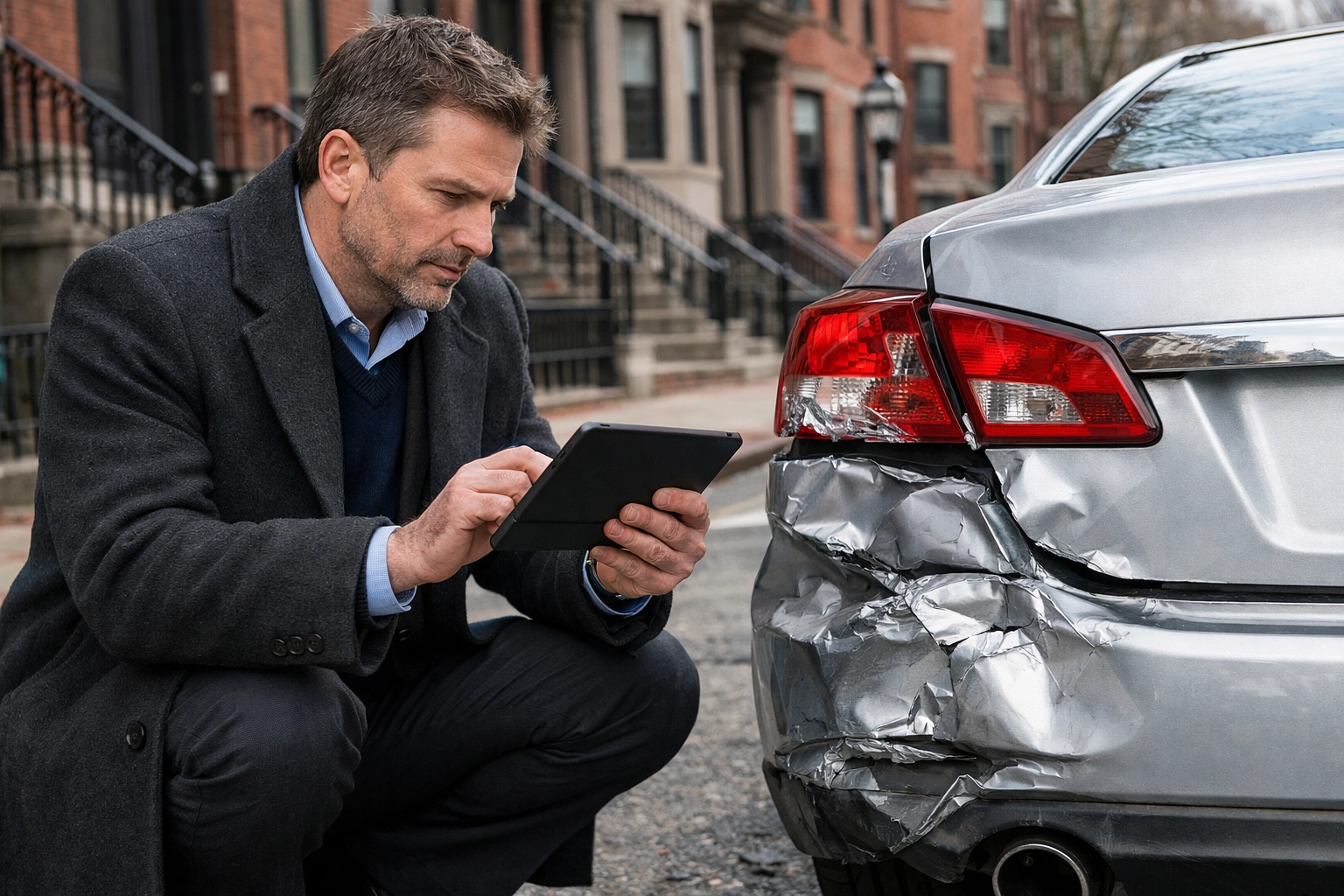
The most helpful evidence includes:
- Police report (especially diagrams and citations)
- Photos/videos of vehicle positions, damage, skid marks, and debris
- Witness statements (names and contact info matter)
- Dash cam or surveillance footage (businesses and MBTA areas sometimes have cameras)
- Vehicle “black box” data (speed, braking, seatbelt use in some cases)
- 911 call logs and timestamps
- Medical records linking symptoms to the crash
If you can, take pictures before vehicles move. If you can’t, don’t worry. You may still have a strong case. But timing matters, and evidence disappears fast in the city.
What if the other driver says you “stopped short”?
This is one of the most common defenses insurers use. They’ll say the front driver stopped suddenly or “for no reason.”
A few things to keep in mind:
- Sudden stops are often normal in Boston. Pedestrians step off curbs. Traffic signals change. Cars cut in.
- Even if you stopped quickly, the rear driver still has a duty to leave enough space.
- If the rear driver was distracted, the “stopped short” argument usually falls apart.
So yes, this defense can matter. But it doesn’t automatically wipe out the rear driver’s responsibility.
Rear-ended at a red light or in stop-and-go traffic? Fault is usually clearer
If you were stopped at a red light, stop sign, or in backed-up traffic, Boston Rear-End Accident Fault usually points strongly to the rear driver.
Why? Because:
- You were already stopped
- The rear driver had time to see traffic stacking up
- The rear driver still hit you anyway
These cases often come down to damages and injuries, not who caused the crash.
What if the rear driver was distracted or texting?
Distraction is a major factor in rear-end collisions. If a driver admits they looked down, reached for something, or was using a phone, it can strengthen the liability case.
Distraction can also affect:
- How insurers evaluate fault
- Whether punitive-type arguments come up (rare, but serious behavior matters)
- How settlement negotiations play out
If you want practical reading on the dangers and real-world resources around this issue, we also have a page you may find helpful: https://www.joelhschwartz.com/there-is-no-shortage-of-texting-and-driving-resources
How insurance companies try to shift Boston rear-end accident fault
Even when liability looks obvious, adjusters may still try to reduce what they pay. They may do it by:
- Suggesting your injuries were “pre-existing”
- Claiming minimal property damage means minimal injury
- Arguing you contributed to the crash (lane change, sudden stop, brake lights)
- Pushing you to give a recorded statement early
- Offering a quick settlement before your treatment is done
You don’t have to accept that approach. Fortunately, you can push back with evidence and a clear legal strategy.
What compensation can cover after a rear-end crash
A rear-end accident can cause more harm than people expect, especially with whiplash, back injuries, and concussions. If another driver caused the crash, compensation may include:
- Medical bills (past and future)
- Lost wages and reduced earning capacity
- Pain and suffering
- Out-of-pocket costs (rides, medication, copays)
- Vehicle repair or total loss claims (handled separately in many cases)
If you’re trying to understand how value is calculated, this guide can help you get oriented: https://www.joelhschwartz.com/how-much-is-my-case-worth
What you should do right away to protect your claim
You don’t need to “lawyer up” at the scene. But you do want to protect yourself. Here are smart steps that help in almost every Boston Rear-End Accident Fault dispute.
1) Get medical care and follow up
If you feel “mostly fine,” still get checked out. Symptoms can show up later, and delayed treatment creates insurance arguments.
2) Document everything
Keep:
- Photos
- Repair estimates
- Medical visit summaries
- A short daily note about pain and limitations
3) Don’t guess in statements
Be honest, but don’t speculate. “I’m not sure” is better than a confident guess that turns out wrong.
4) Be careful with quick settlements
A fast check can look tempting. But once you settle, you usually can’t go back for more.
5) Talk to a lawyer before fault gets “assigned” to you
Once an insurer locks in a story, it can be hard to undo. Early help often means less stress and fewer mistakes.
If you’re wondering whether your situation qualifies as a claim, this page breaks down key factors in plain English: https://www.joelhschwartz.com/do-i-have-a-case-factors-that-are-considered
How we help when liability is disputed
If you’re dealing with conflicting stories, questionable police reports, or an insurer pushing blame onto you, you’re not alone. Boston Rear-End Accident Fault disputes are common, even in cases that seem simple.
At Joel H. Schwartz, P.C., we’ve handled 30,000+ claims over 60+ years, and we’ve recovered more than $500 million for injured clients. That experience matters when the other side tries to minimize fault or minimize your injuries.
We can help by:
- Gathering video and witness evidence early
- Reviewing the police report for errors or missing details
- Working with experts when needed (accident reconstruction, medical opinions)
- Handling insurance communications so you don’t get cornered
- Building a clear demand package that matches the real impact of the crash
If you want to talk it through, reach out for a free consultation. There’s no obligation, and we’ll give you a straight answer about what steps make sense next.



 1 Washington Mall #16
 (617) 742-1170